
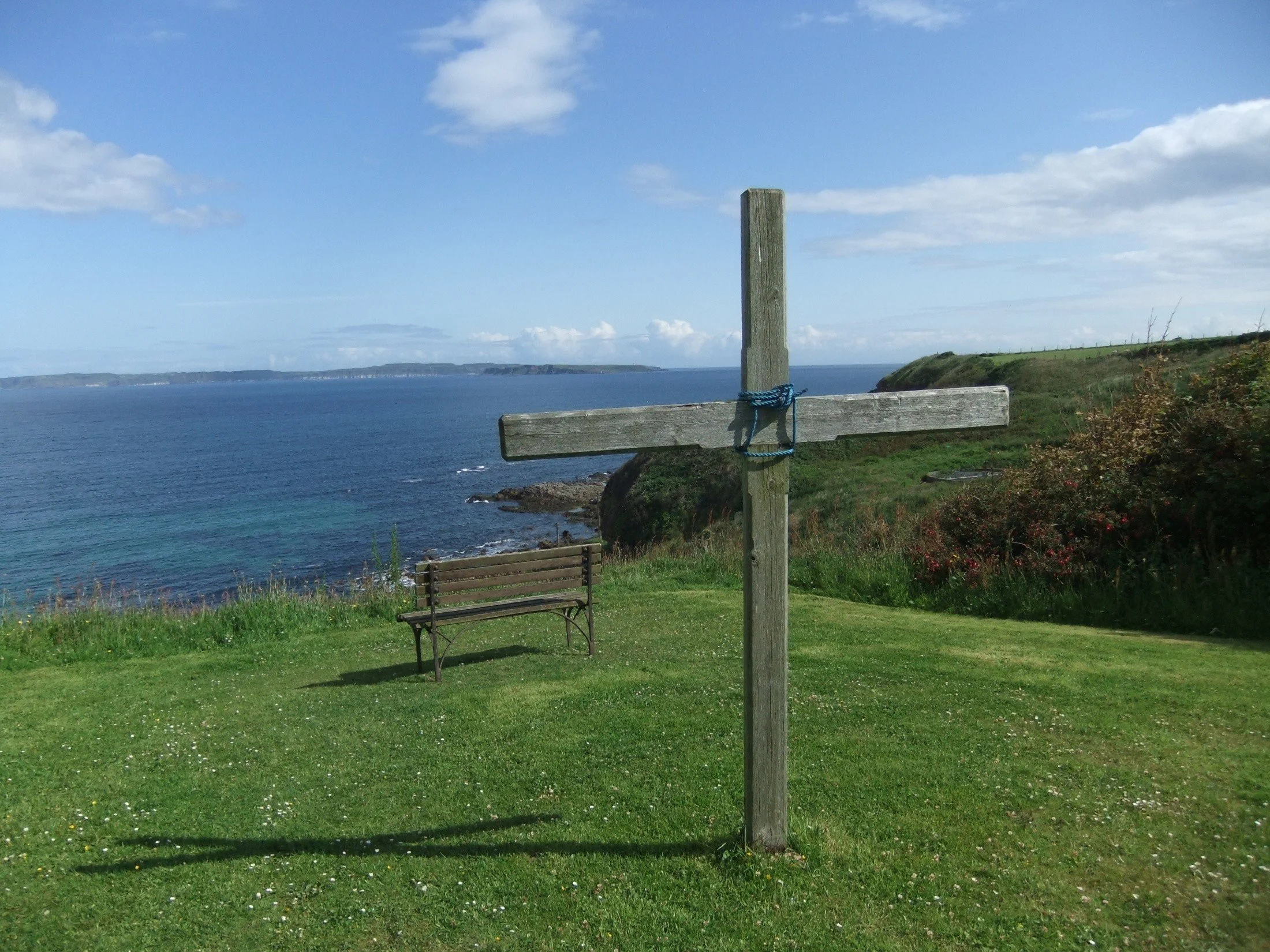
The picture is the cross at the top of the hill at Corrymeela. An amazing place to bring your morning coffee or evening tea and ponder the wonders of life. The land on the horizon is Scotland.
Again, in this busy week, I am plagiarizing myself and borrowing part of a reflection from my 2017 UCC Lenten devotional Parables, Prayers and Promises, Daily Devotions on Jesus.
On this Good Friday, when we remember the inhumanity of this day over two thousand years ago, this is a reflection that ponders the meaning of the phrase “take up your cross and follow Jesus”.
Scripture: Matthew 10:37-39
Whoever loves father or mother more than me is not worthy of me; and whoever loves son or daughter more than me is not worthy of me; and whoever does not take up the cross and follow me is not worthy of me. Those who find their life will lose it, and those who lose their life for my sake will find it.
“What does it mean to take up the cross and follow Jesus? I was never drawn to the symbol of the cross as a Christian symbol. I remember hearing years ago that the comedian Lenny Bruce once said that wearing a cross was like wearing an electric chair, meaning that in ancient times the cross was a symbol of execution, just as an electric chair is today for North Americans. It does give one a bit of pause for thought.
A quick bit of research shows that in fact crosses are very old. The oldest examples of their depiction have been found engraved on flat pebbles in a cave in the French Pyrenees dating from 10,000 BC. There are many examples of pre-Christian crosses depicted in Eastern and Western cultures across the world.
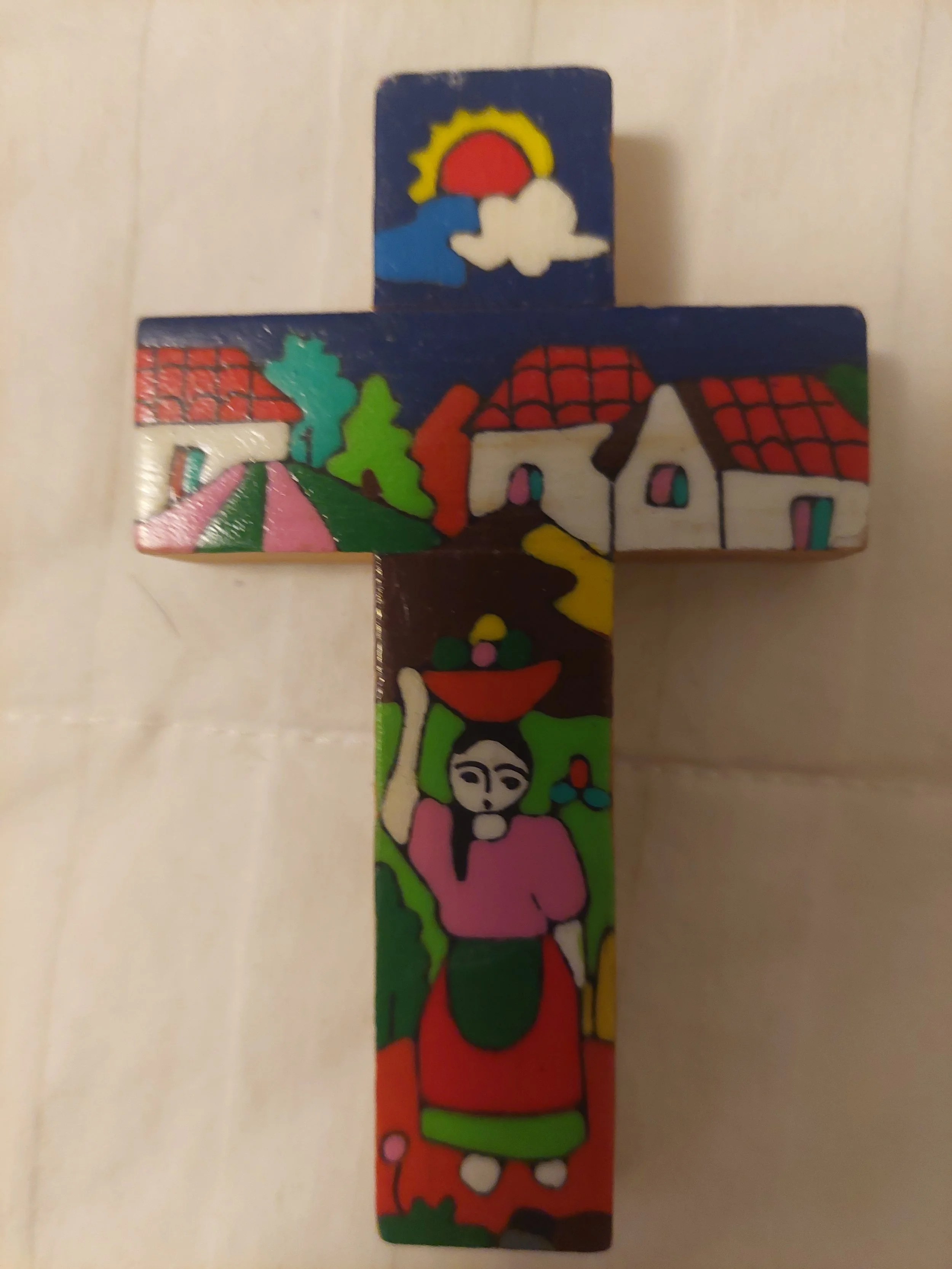
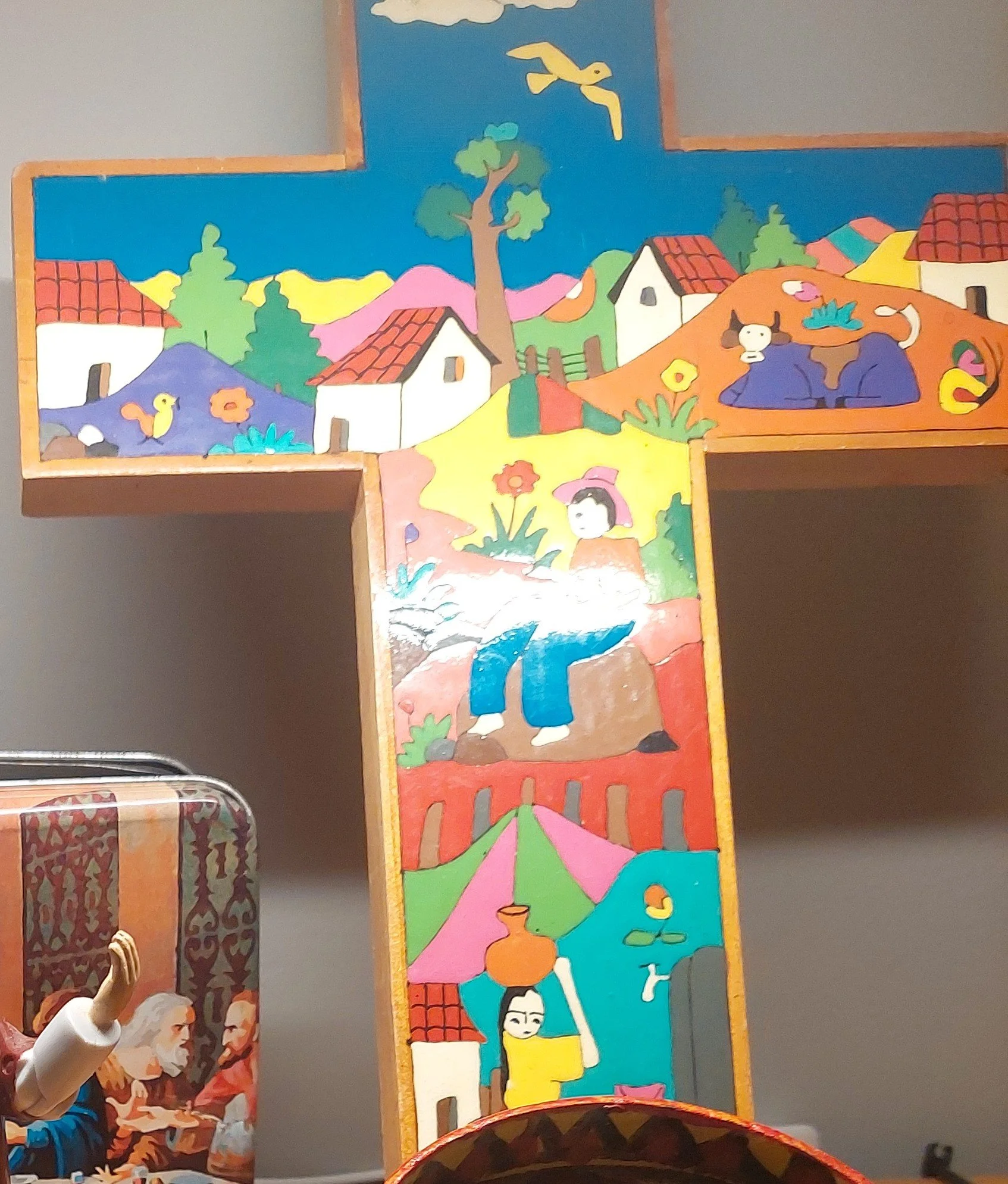
In the mid 1990s I became familiar with the beautiful painted crosses of El Salvador. These crosses originated in the 1960s and 70s, when people fled the brutal persecutions in El Salvador and lived in refugee camps in neighbouring countries. Here they tried to reconcile the pain and horror of their experience with their strong Christian faith. They thought of all the things that brought hope and meaning to their lives and then painted them in bright colours on wooden crosses. In these crosses, we see pain and sorrow, but also hope, devotion, and daily life.
I now find that I have a collection of crosses – Irish turf crosses from Ireland, crosses from Mexico, Cuba, Peru, even one I painted at a youth vigil years ago. I began to realize that crosses not only reminded people of execution, oppression, pain, and suffering, but they could also tell stories of transformation, hope, and life.
We all have our crosses to bear. How many times have you heard that said? I’ve heard it many times, and always thought of it as a burdensome, painful activity. But what if it means something different, or if at least that’s not the complete picture?”
After I re-read this reflection today, I began to reflect on my own collection of crosses. After my first purchase about 25 years ago, a large and small cross from El Salvador (pictured) that I found at an international chaplains’ conference, I found myself kind of collecting crosses that were unusual, or that at least I found interesting. Kind of like my nativity scene collection at Christmas.
I did have several made of Irish turf, but I think I have given them away. One was a replica of the great high cross of Muirdach, and one exactly like it sits in the centre of the worship space at the Corrymeela Peace and Reconciliation Centre in Northern Ireland. The original, carved in stone sometime in the 9th or 10th Century, stands 19 feet high near Monasterboice in Ireland. It’s many panels on both the front and the back have carvings with biblical stories and themes from both the Hebrew and Christian Scriptures.
I have one that Alana brought back for me from Mexico. Although it is made of clay, it is similar to the Salvadoran ones in the vibrant colours of that area of the world, and with the signs of life depicted. Another one of my favourites is one that I painted during a confirmation activity many years ago.
I began to realize that crosses could not only remind people of execution, oppression, pain, and suffering, but could also tell stories of transformation, hope, and life. And that even the worst humanity has to offer cannot destroy the love of God in the world.
As with all of my reflections in the devotional, it was paired with a video clip. I had forgotten about this one. It was from a BBC series called The Rev, which is about a young priest ministering in East London at St. Saviour in the Marshes. Rev. Adam Smallbone balances the needs of true believers, street people, drug addicts, and social climbers, along with the pressures from his Archdeacon to increase the income and size of his congregation. It also stars Olivia Coleman as Adam’s wife.
This clip is from the third season, and Adam has reached a low point in his career. It is Holy Week, he has been accused of misconduct by a co-worker, and there is now an investigation into him. He has just carried a heavy cross through the city streets to a neighbouring congregation that has asked to borrow it. The clip is called Rev meets God. (spoiler … Liam Neeson plays God …)
https://youtu.be/9Yo-UYCoZ9o?si=TgGRJZhRDR_FmWG-
Questions for reflection:
What does it mean to you to take up the cross and follow Jesus?
What do you take up? What do you leave behind?
I hope to see some of you this evening at our Good Friday service with Hillside, Hope and St. John’s. Tomorrow, I will post some musings about Holy Saturday … and include links to a couple of videos that might make you smile … one I posted last year and a new one. Stay tuned.
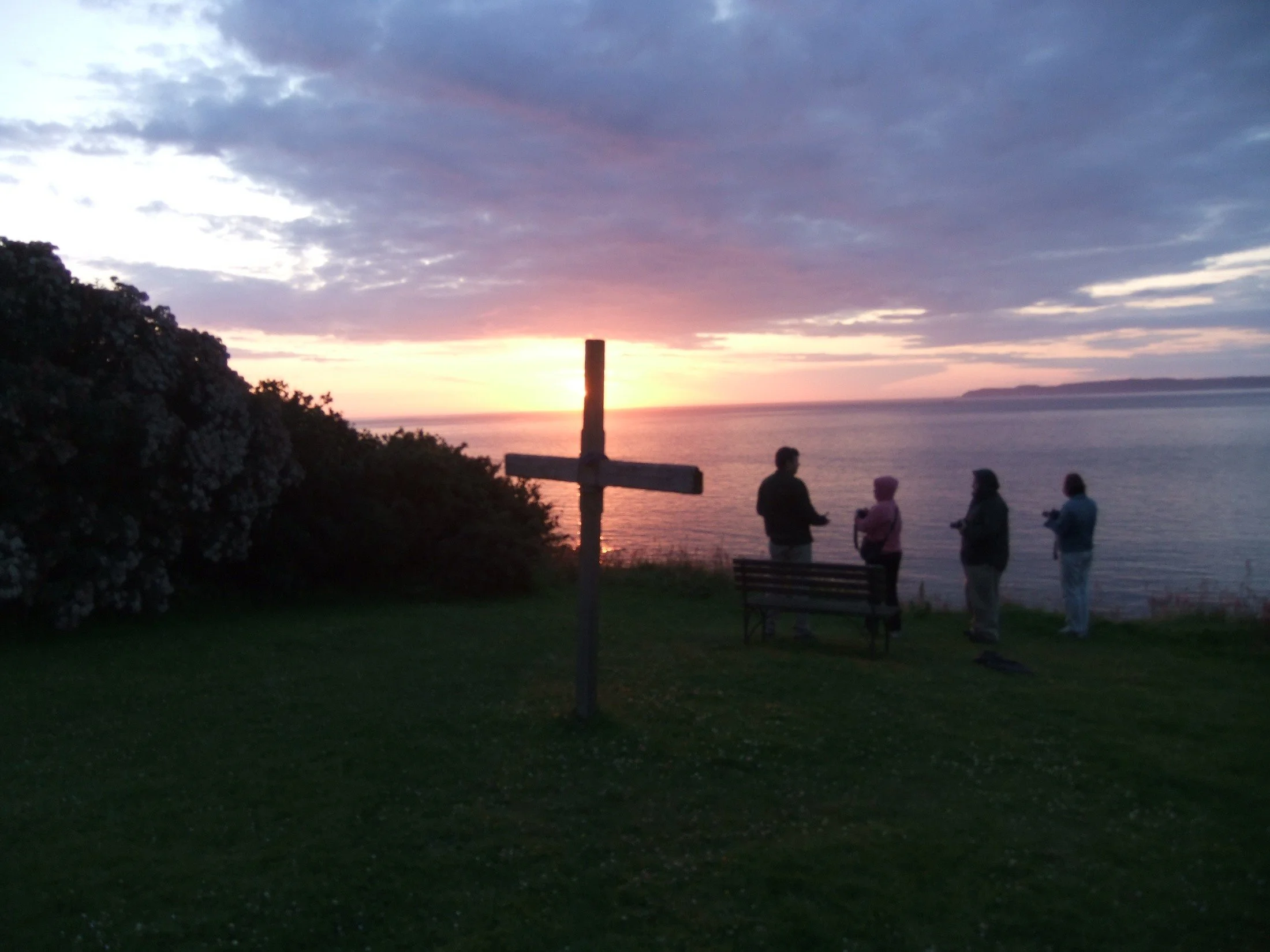
Corrymeela at sunset